
CdTe Solar BIPV Glass — Semi-Transparent
CdTe Solar BIPV Glass — Semi-Transparent
Semi-transparent BIPV glass — building-integrated photovoltaic glazing that generates electricity while transmitting daylight (0–60% adjustable). Available as laminated single-glazed panels for skylights and roofs, or as double-glazed insulating units (IGUs) for curtain walls and windows. Max single panel 2200 × 1600 mm. CdTe thin-film technology — Class A fire-rated, IEC/EN 61215 and CE certified.
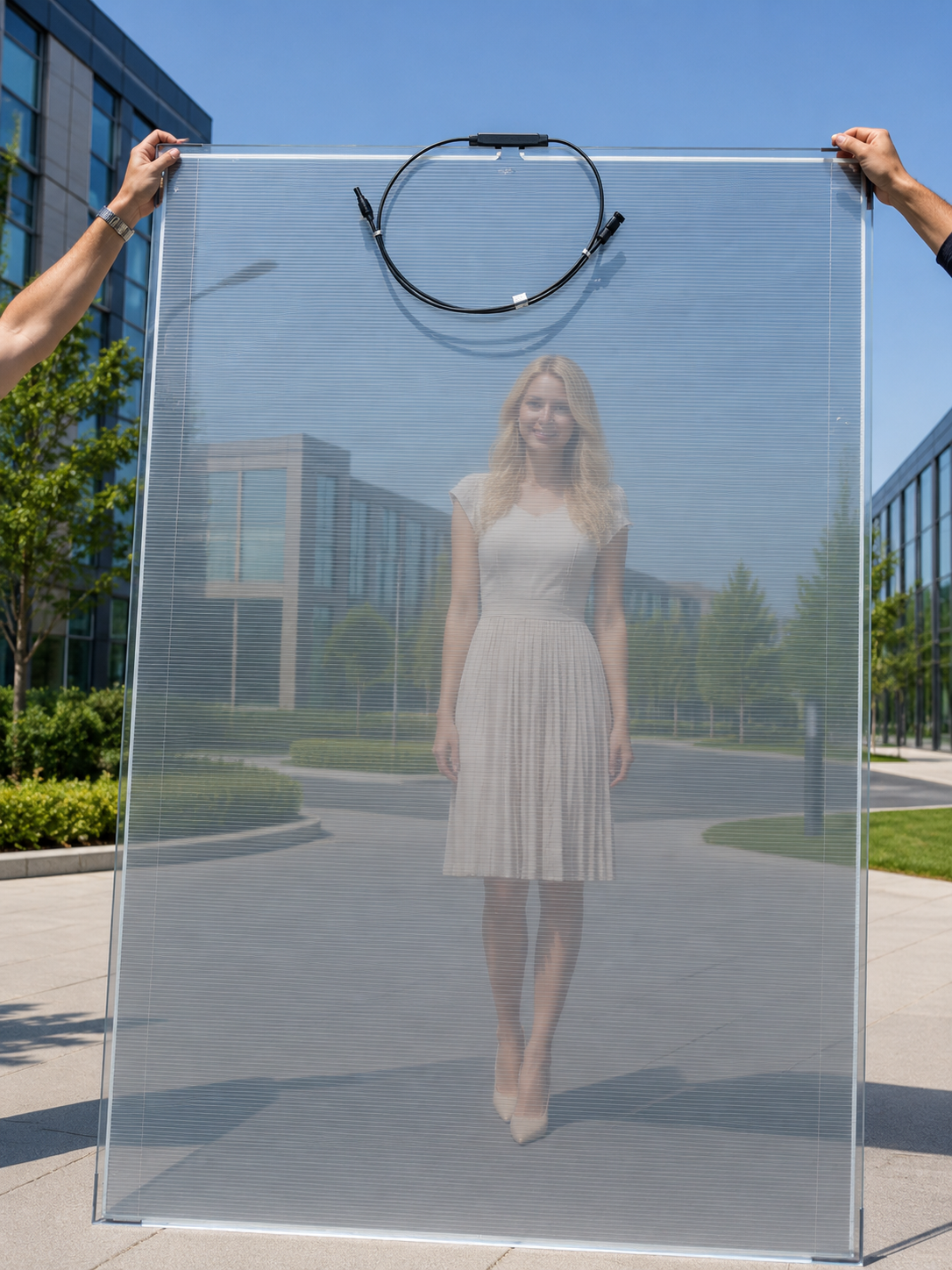
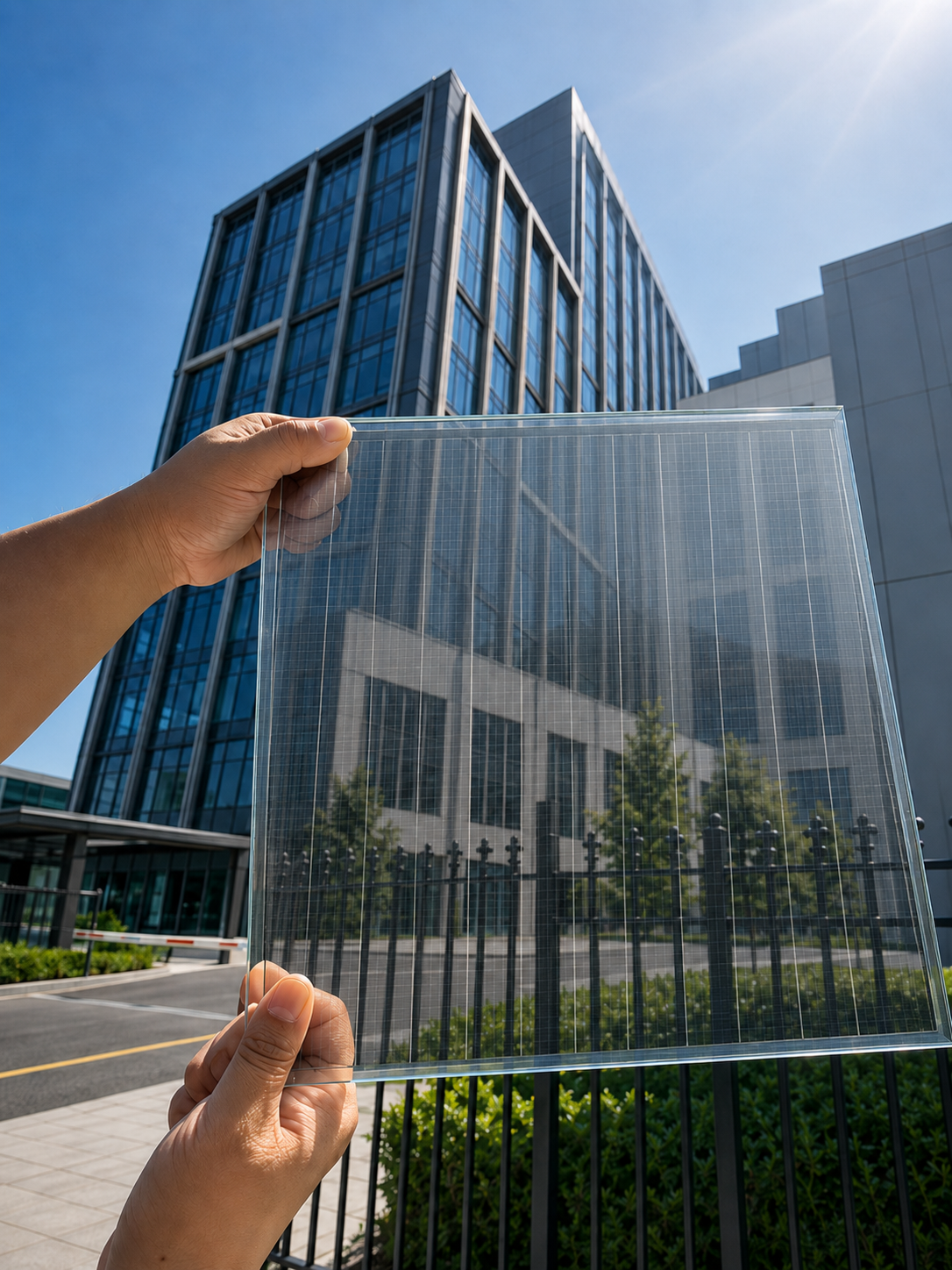
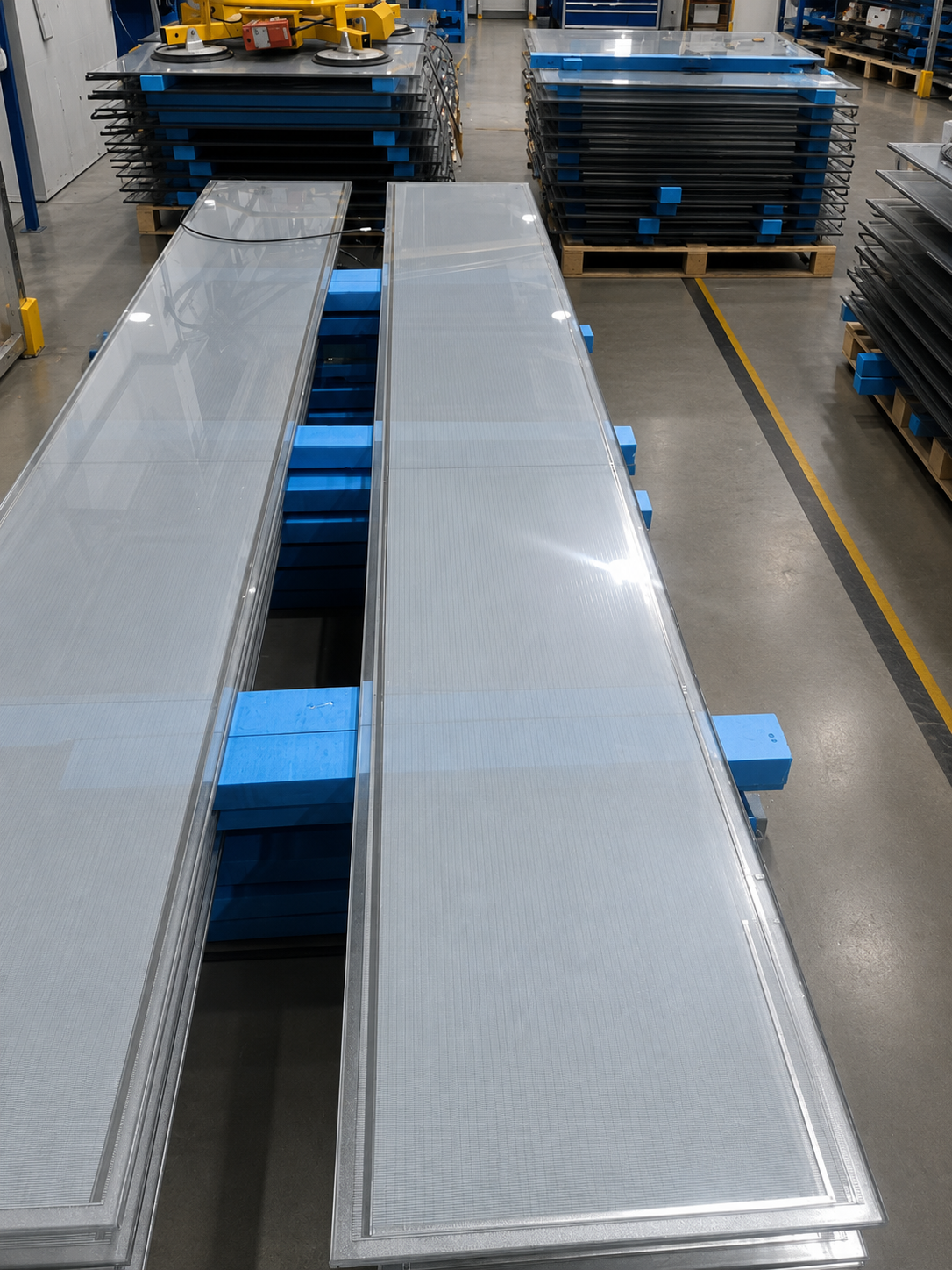

Semi-transparent power-generating glass for facades, curtain walls, skylights, sunrooms, balustrades and overhead glazing — the building skin that quietly produces electricity instead of just covering the structure. Light transmission is 0–60%, specified per project.
Two build-ups: laminated or double-glazed
The same CdTe power-generating layer can be built into either a single laminated panel or a sealed double-glazed insulating unit (IGU), so the product slots into both overhead and vertical glazing without compromise.
- Laminated (single-glazed) — power-generating layer encapsulated between two toughened glass panes with a PVB or EVA interlayer. Slim profile, lower weight; used for skylights, atria, canopies, balustrades and pitched roofs where IGU thickness or weight isn’t appropriate.
- Double-glazed insulating unit (IGU) — laminated CdTe pane on the outer leaf, sealed cavity, inner Low-E toughened pane with warm-edge spacer. Drops U-value to ~1.0 W/m²·K and adds acoustic mass; used for curtain walls, windows, doors and any thermally separated facade where a standard IGU would normally go. The CdTe panel is one-for-one swap for ordinary curtain-wall glass.
Every panel is engineered to your project — glass thicknesses, interlayer, transmission percentage and IGU cavity all specified per drawing rather than picked from a fixed catalogue.
Why CdTe, not conventional silicon?
This glass uses cadmium telluride (CdTe) thin-film technology — second-generation thin-film solar, distinct from the crystalline silicon (c-Si) panels you see bolted onto roofs. For building-integrated work, CdTe has several key advantages:
- Stronger output in low and diffuse light — performs better than c-Si on overcast days and north-facing facades, which suits the UK climate.
- Lower temperature coefficient — when surface temperatures rise in summer, c-Si output drops noticeably; CdTe stays much more stable.
- Clean, uniform appearance — no visible cell-grid pattern, so the facade reads as glass, not as a solar array.
- Large single-panel sizes — up to 2200 × 1600 mm in a single sheet, well beyond what c-Si BIPV can produce.
Certified to IEC/EN 61215 & 61730, CE and EN 14449, Class A fire-rated and IP67. Almost no UK supplier offers this level of transparency control and build-up flexibility on a power-generating panel — we engineer the make-up around your project rather than ask you to design around ours.
Key specifications
- PV technology: cadmium telluride (CdTe) thin film — second-generation thin-film solar
- Light transmission: 0–60%, specified per project
- Build-ups available: laminated single-glazed or double-glazed insulating unit (IGU, with Low-E and warm-edge spacer, U-value down to ~1.0 W/m²·K)
- Maximum single panel: 2200 × 1600 mm
- Fire rating: Class A · System voltage: 1500 V · Ingress protection: IP67
- Standards: IEC/EN 61215, IEC/EN 61730, CE, EN 14449, GB/T 29551
Typical applications
Curtain walls · skylights and atria · sunrooms and conservatories · balustrades · daylight roofs · agricultural glasshouses · covered walkways.